
3PL vs In-House Logistics: Which Best Fits Your Business?
Contents
In today’s competitive market, logistics costs directly shape your profit margins. Simply put, unmanaged logistics expenses silently erode earnings. Freight fees, warehouse rent, labor expenses, storage footprint, equipment maintenance, and operational inefficiencies multiply quickly. Ignoring these factors inflates overheads, weakens market competitiveness, and hinders business scaling.
As businesses expand, order volumes surge, product lines diversify, and distribution networks widen. Legacy logistics setups rapidly fail to keep pace. Logistics encompasses more than simple transport; it integrates warehouse management, inventory control, equipment selection, and long-term cost strategy. Building a robust system early eliminates costly operational roadblocks.
Decision-makers constantly evaluate a core question: Should you outsource operations to a 3PL expert or build an internal In-House Logistics team? This article compares 3PL and In-House Logistics side by side to help you select the ideal model for your company.
What is 3PL?
3PL (Third-Party Logistics) delegates specific or complete supply chain operations to external logistics providers. Service offerings include warehousing, picking and packing, order processing, freight delivery, regional distribution, and comprehensive fulfillment.
Outsourcing back-end logistics frees internal teams to focus on revenue-driving functions. Your business concentrates on sales, marketing, product R&D, and customer retention while specialists handle physical supply operations.
Key benefits of 3PL center on capital expenditure reductions and simplified management. Businesses avoid buying warehouses, purchasing heavy equipment, hiring permanent floor staff, or building transport networks from scratch. Fast-growing enterprises and seasonal brands leverage 3PL flexibility to scale capacity up or down on demand.
Nevertheless, partnering with a 3PL requires thorough evaluation. Select standardized providers offering transparent tracking technology, proven SLA benchmarks, and specialized capability for your specific product categories.
What is In-House Logistics?
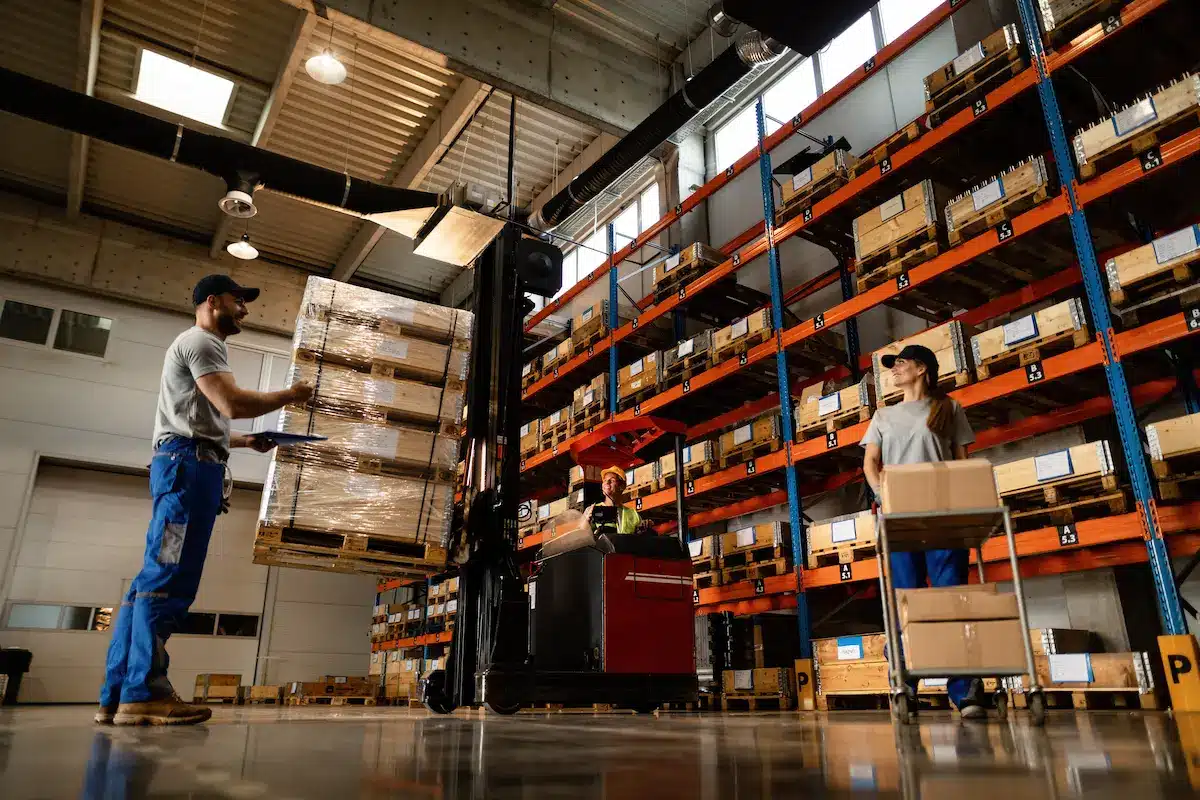
In-House Logistics manages all supply chain operations internally using owned company resources. The business directly operates facility space, software, hardware, and dedicated personnel to execute warehousing, inventory control, packing, distribution, and process auditing.
Direct operational control stands out as the primary advantage of In-House Logistics. Full control over storage protocols, packaging standards, stock visibility, and delivery workflows benefits brands with strict quality requirements. High-value goods, fragile items, temperature-sensitive inventory, and regulated products thrive under this model.
However, executing In-House Logistics demands substantial capital and operational readiness. Companies need dedicated warehouse space, racking systems, WMS software, labor, and ongoing maintenance budgets. Flawed execution risks turning internal infrastructure into fixed overhead that limits business agility.
Comparing 3PL vs In-House Logistics
While 3PL and In-House models share the goal of efficient storage and distribution, they differ greatly across startup capital, operational flexibility, quality control, and scalability.
| Comparison Area | 3PL | In-House Logistics |
| Initial Investment | Lower: Uses provider facility, software, and personnel. | Higher: Demands heavy capital for facilities, systems, and staff. |
| Operational Flexibility | High: Adjusts scale quickly during order spikes or low seasons. | Moderate: Bound by internal facility capacity and labor limits. |
| Quality Control | Managed via SLA: Governed by contract terms and provider standards. | Direct Control: Oversees every handling step internally. |
| Long-Term Cost Structure | Converts fixed overhead into variable per-order costs. | Delivers lower unit costs under consistent high volumes. |
| Labor Management | Removes warehouse hiring, training, and management burdens. | Requires dedicated internal ops, management, and QA teams. |
| Scaling Speed | Faster: Taps directly into established provider networks. | Slower: Needs procurement lead times for space and equipment. |
| Best Suited For | E-commerce, retail, seasonal products, and fast-scaling brands. | Manufacturers, strict regulatory products, and steady high-volume businesses. |
Neither model fits every operational context. Rapidly expanding businesses and seasonal retailers optimize cash flow through 3PL flexibility. Conversely, enterprises moving consistent high volumes with specialized handling needs achieve long-term efficiency through internal setups.
Essential Factors Before Choosing Your Model
Evaluating the specific constraints of 3PL and In-House Logistics prevents costly operational misalignment down the road.
Constraints of 3PL
Outsourcing boosts agility, yet delegating operations requires strong partner oversight. Success relies on clear communication, ongoing performance tracking, and selecting reliable providers.
1. Reduced Process Visibility
Handing off warehousing means relinquishing minute-by-minute floor control. Set clear Service Level Agreements (SLAs) from day one to maintain packaging, handling, and shipping accuracy.
2. Reliance on Partner Standards
Your customer experience mirrors the provider’s execution speed, safety protocols, and inventory accuracy. Select 3PL partners with proven track records in your specific product sector.
3. Variable Ancillary Fees
Base rates cover core tasks, but extra services incur additional charges. Account for storage, pick-and-pack, order processing, and returns handling to evaluate total operational cost accurately.
Constraints of In-House Logistics
Internal management offers total control, yet building internal capacity demands heavy capital investments and long-term operational commitments.
1. Heavy Initial Capital Expenditure
Building internal infrastructure consumes significant budget reserves. Costs include facility leases, racking systems, pallets, material handling equipment, WMS software, and specialized staffing.
2. Fixed Costs During Demand Slumps
Fixed overhead expenses persist regardless of sales fluctuations. Rent, equipment depreciation, software licenses, and core salaries continue during slow periods, raising your per-unit cost.
3. Slower Expansion Speed
Scaling internal operations takes time. Acquiring space, installing racks, hiring workers, and testing software cause expansion delays during sudden demand surges.

Which Business Types Fit Each Model?
Match your operational profile with the appropriate logistics structure below:
| Business Profile | Recommended Model |
| Expanding online retail or E-commerce channels | 3PL |
| Fluctuating order volumes or seasonal sales surges | 3PL |
| Rapid multi-region distribution expansion plans | 3PL |
| Consistent high-volume daily order output | In-House Logistics |
| Strict quality control and custom packaging needs | In-House Logistics |
| Specialized storage conditions (cold chain, hazardous) | In-House Logistics |
| Main hub existing with promotional volume surges | Hybrid Logistics |
| Minimizing upfront warehouse equipment purchases | Rental Equipment / Pallet Pooling / Hybrid |
Combine Strengths Using Hybrid Logistics
Businesses do not have to pick an all-or-nothing approach. Hybrid Logistics blends In-House control with 3PL scalability. Operate a central warehouse for core operations while hiring 3PL partners to manage regional distribution or seasonal promotional surges.
For instance, manage primary stock internally to preserve quality standards, and deploy 3PL services to fulfill remote regional deliveries efficiently without building distant facilities.
Alternatively, handle daily standard volumes internally, but pass peak promotion fulfillment to 3PL partners. This setup prevents internal warehouse congestion without permanent team expansion.
Hybrid Logistics protects core quality control while expanding capacity flexibly. Combining strategies prevents over-investing in physical assets. Scale material handling equipment—such as pallets, nesting racks, and storage units—using rental models aligned with real-time operational demand.
5 Decision Factors for Logistics Success
Analyze these key operational factors before committing to a long-term logistics strategy:
1. Monthly Order Volume
Unpredictable order volumes favor 3PL models to lower fixed overhead risk. Steady high-volume operations justify building internal infrastructure for lower per-unit costs.
2. Capital Budget & Cash Flow
3PL minimizes upfront capital deployment. In-House requires significant upfront funding, but delivers overall savings once operational scale balances initial costs.
3. Product Handling Complexity
Standard packaged goods move easily through 3PL setups. Complex, fragile, or highly regulated items benefit from direct internal oversight.
4. Target Expansion Speed
3PL partners unlock instant national scale through established networks. In-House expansion requires deliberate construction, hiring, and setup timelines.
5. Warehouse Equipment Readiness
Internal setups demand complete equipment deployment: standard pallets, industrial racking, packing stations, forklifts, and safety gear. Inadequate equipment causes layout clutter, poor space utilization, and higher product damage rates.
The Role of Pallets & Warehouse Equipment in Logistics
Whether deploying 3PL, In-House, or Hybrid models, quality warehouse equipment keeps supply chains moving smoothly. Efficient storage, rapid picking, and safe transport depend on reliable equipment matched to your facility footprint.
Standardized pallets, protective packing materials, and industrial racks protect product integrity. Proper gear keeps goods off floor surfaces, cuts product damage rates, speeds up forklift handling, and streamlines inventory auditing.
To avoid massive initial capital layouts, renting pallets and warehouse equipment offers a cost-effective alternative. Rental options allow facility managers to adjust equipment numbers dynamically during peak campaigns or temporary storage expansion without committing to permanent assets.
Essential logistics assets include plastic pallets, wooden pallets, selective racking, nesting racks, material handling units, and protective packaging.
UPR Thailand delivers flexible pallet and warehouse equipment solutions designed to optimize your logistics operations. Choose from rental pallets, plastic pallets, wooden pallets, Nesting Racks, Pallet Racks, and packaging supplies tailored to your daily facility operations.
Selecting the right equipment lowers hidden operational costs, prevents damage, speeds up order fulfillment, and maximizes overall supply chain efficiency.
Frequently Asked Questions: 3PL vs In-House
Q1: Can 3PL providers handle specialized products?
Yes, provided you partner with specialized providers offering certified storage environments. Examples include temperature-controlled cold chains, high-value security storage, or fragile goods handling. However, exceptionally complex requirements often run better under internal management.
Q2: Should a company with an existing warehouse consider 3PL?
Yes, established companies frequently adopt 3PL for strategic support. Use 3PL for distant regional distribution, short-term promotional peaks, or fast-moving items while maintaining primary operations internally.
Q3: If 3PL fees seem high, should we instantly move In-House?
Always compare total 3PL fees against complete internal operating costs. Include lease costs, labor salaries, equipment depreciation, maintenance, software licenses, and operational error costs. 3PL remains cost-effective unless internal order volume justifies fixed facility overhead.
Q4: How can businesses avoid large upfront equipment costs?
Switch to equipment rentals and pallet pooling programs to eliminate initial capital expenditure. Renting lets you scale asset counts precisely to active seasonal volumes, maintaining financial flexibility.
Optimize Your Logistics Agility with UPR Thailand
Whether executing 3PL, In-House Logistics, or a Hybrid Logistics framework, high-performance warehouse equipment drives operational success.
UPR Thailand delivers expert guidance across rental pallets, plastic pallets, wooden pallets, storage racking systems, and material handling solutions. We help you select cost-effective setups tailored to your product specifications, floor plans, and real-time operational scale.
Contact UPR Thailand today to consult with our logistics asset specialists.
UPR (Thailand) Co., Ltd.
TEL: +66-2-672-5100
EMAIL: info-thailand@upr-net.co.jp
UPR (Thailand) Co.,Ltd. > Columns > Logistics > 3PL vs In-House Logistics: Which Best Fits Your Business?
 Contact us
  Call us
  Line Official