
Pack Fast, Ship on Time: Getting More Out of Your Pallets and Warehouse Racking System
Contents
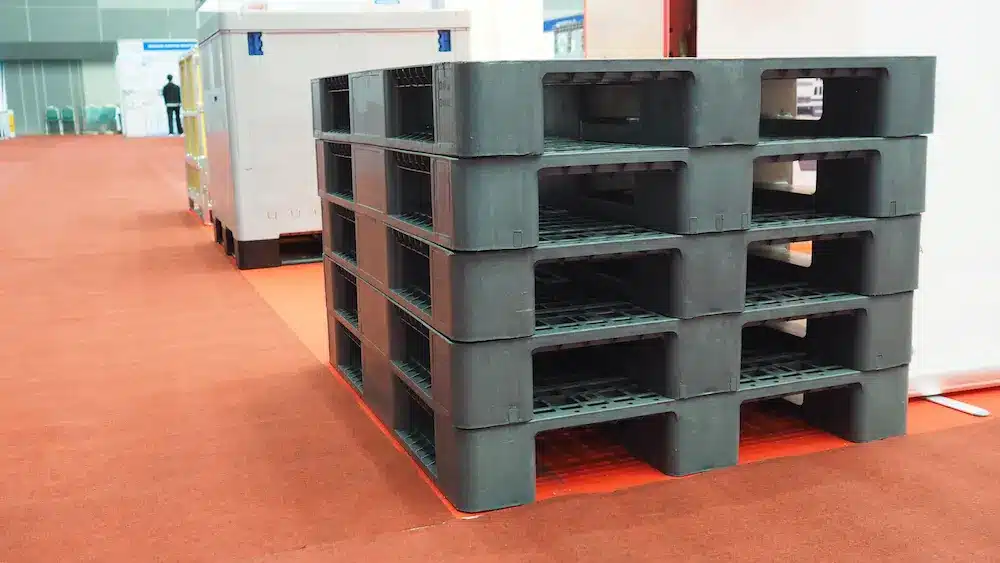
Order volumes climb, the team stays the same size, and bit by bit, things start to slip. Picks take longer than they used to. Items end up in the wrong boxes. Trucks pull out late, or sometimes don’t pull out at all.
It’s tempting to blame the staff. But after walking through enough warehouses, we usually find the bottleneck somewhere else entirely: the storage setup never caught up with the business. The fix doesn’t have to be complicated either. Most of the time, simply using your pallets and racking system the way they were designed to be used will solve the bulk of it.
What an Unorganized Warehouse Quietly Costs You
In the early days, floor stacking did the job. It’s cheap, needs no equipment, and you can set it up in an afternoon. The trouble starts later, once your SKU list has grown past what one person can hold in their head.
You’ll usually notice it through small frustrations that turn into expensive ones:
- A single pick takes 5 to 10 minutes because someone has to shift three boxes to reach the right one
- Cartons further down the stack get crushed under the weight above
- Stock counts never quite match the system, no matter how often you recount
- New hires take weeks before they know where anything actually lives
If two or three of those sound familiar, the storage setup is overdue for a rethink — not the team.
What Changes Once Pallets and Racking Are Doing Their Job
The first thing you notice is location clarity. Every pallet has its own spot, and that spot has a name. Forklifts get in and out without choreography. Pickers stop walking in circles. And the whole flow — Receive, Store, Pick, Pack, Ship — finally moves in one direction instead of doubling back on itself.
The warehouse stops being a place where stuff is stored and starts working like a system.
Which Racking Type Suits Your Operation?
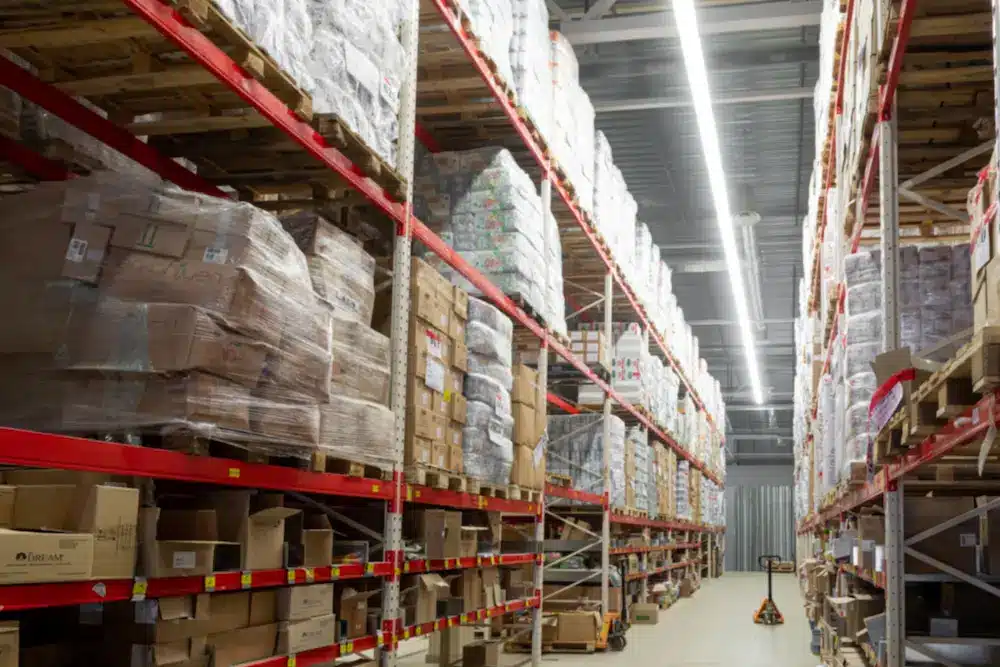
Not every warehouse needs the same setup. The right answer depends on what you’re storing, how often it moves, and how many different SKUs you handle. Four configurations cover most situations.
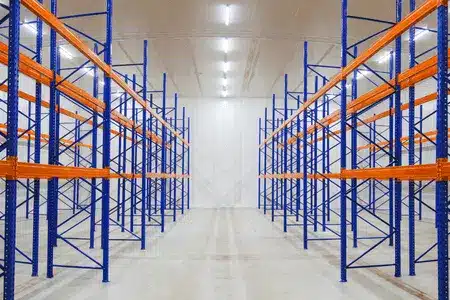
1. Selective Racking — Fast Access, Built for Mixed SKUs
This is the workhorse of pallet storage worldwide, and for good reason. Every pallet is reachable directly by a forklift — no shuffling, no waiting. If you carry a wide range of products, this is almost always the right place to start.
- Direct access to every single pallet
- No need to move other goods to reach what you want
- A natural fit for picking and packing operations
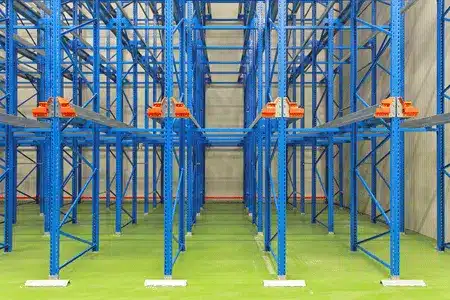
2. Drive-In Racking — Density Over Aisles
If you’re storing large volumes of just a few SKUs (think one product, lots of pallets), drive-in racking gives you serious storage density. Forklifts drive straight into the rack itself, so you skip the aisles and reclaim that floor space.
- Fewer aisles means more pallet positions in the same footprint
- Storage density goes up significantly compared to selective
- You’ll need to commit to either FIFO or LIFO from day one — get this wrong and stock retrieval becomes a daily headache
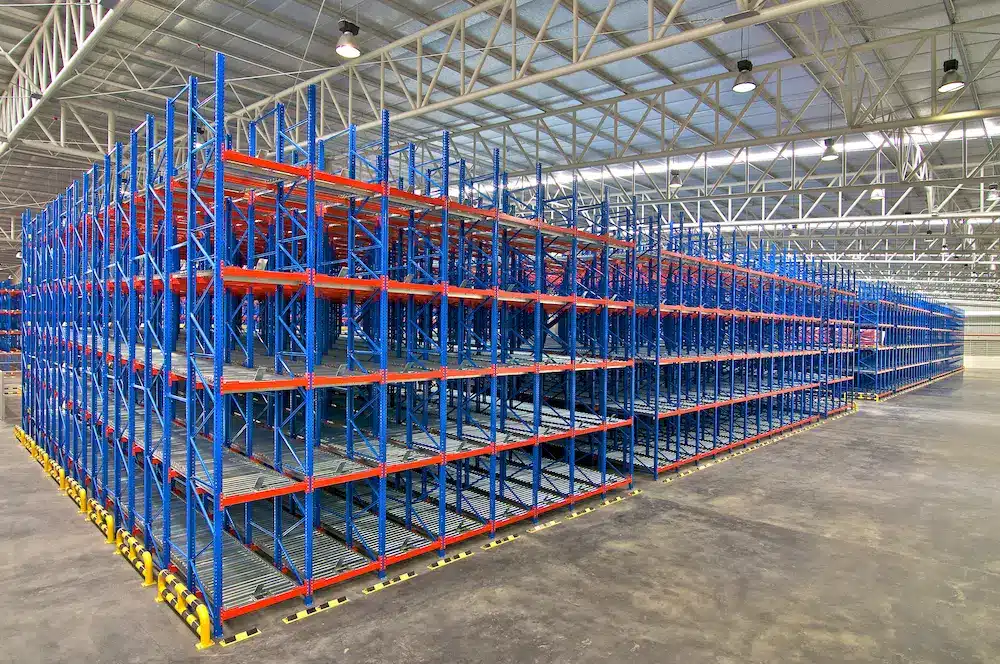
3. Flow Rack (FIFO) — Let Gravity Do the Work
Also called a gravity flow rack or pallet flow rack. The frame sits on a slight slope with rollers built in, so pallets loaded from the back roll forward on their own to the picking face. Once you’ve seen it run, the idea feels obvious. It’s especially useful for anything with a shelf life — food, beverages, pharmaceuticals.
- Pallets feed themselves toward the pick face, no manual re-sorting
- Picking is simpler because the next pallet is always ready and waiting
- FIFO is built into the system, not left to discipline
- Mistakes drop, and packing speeds up at the same time
4. Mezzanine Floor — Build Up Instead of Out
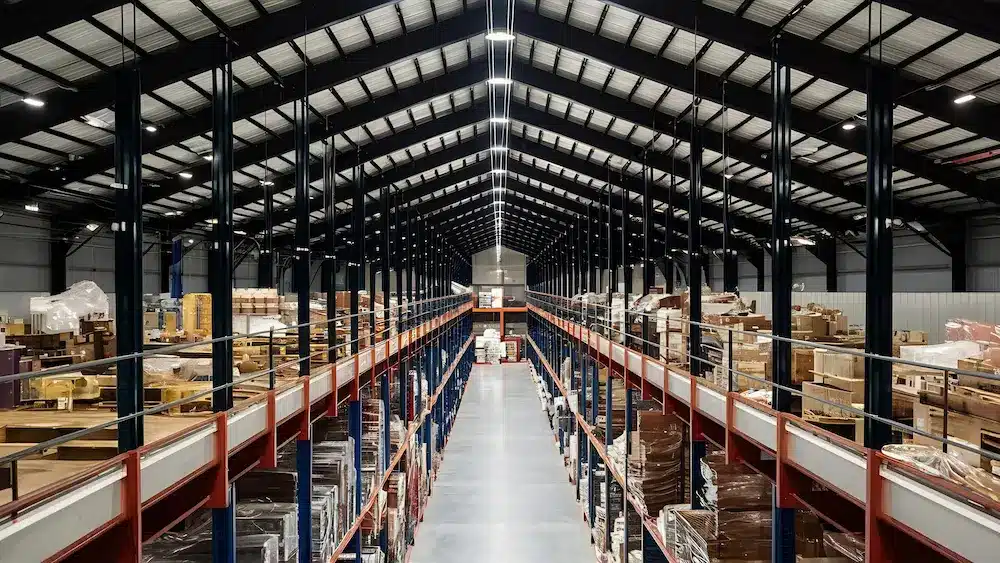
If you’re running out of floor space but not ready to move buildings, a mezzanine is often the answer. It’s a steel structure installed inside your existing warehouse that turns the empty air above your operations into a working floor.
Done right, you can double — sometimes triple — your usable space without expanding the footprint, knocking down walls, or relocating. It also gives you a clean way to keep picking and packing physically separated.
- Adds a second (or third) working level inside the same building
- Clean separation between zones (e.g., picking upstairs, packing downstairs)
- Productivity goes up immediately, with no land purchase required
Layout Tricks That Speed Up Picking and Tighten Up Packing
A racking system on its own won’t fix everything. Where you put each pallet matters just as much as the rack itself. A handful of layout principles will get you most of the way:
1) ABC Analysis (The 80/20 Rule, Applied to Your Inventory)
Roughly 20% of your SKUs probably account for 80% of your picks. Find those products and put them where they’re easiest to grab.
- Fast movers go close to the packing station
- Slower-moving stock lives further back
- Walking distance per order drops noticeably, and the team feels it the same day
2) Location Codes
Give every position in the warehouse an address. The usual format is Zone → Row → Level → Slot, something like A1-B2-C3. With that in place, anyone can find anything.
- Picking gets faster because there’s no guesswork
- New staff become productive in days instead of weeks
- Fewer “where’s this one?” interruptions across the floor
4) Standardize Your Pallets
This one’s small but mighty. Pick a standard pallet size for your operation — 100 × 120 cm is common across Thailand — and stick to it. Mixing pallet dimensions costs you in ways that are hard to see until you stop doing it.
- Pallets sit cleanly inside the racks
- No wasted slots from awkward-sized loads
- Storage is easier, and the whole warehouse is safer
5) Design a One-Way Workflow
Lay the warehouse out so goods always move in the same direction: Receive → Store → Pick → Pack → Ship. Backtracking quietly eats time, and cutting it out is one of the easiest wins available.
What You Can Realistically Expect After the Upgrade
When the pallets and racking are working together properly, the numbers tend to come out something like this:
- Packing time drops by 30 to 50%
- Orders ship on schedule, without anyone working late
- Picking errors fall noticeably
- Overall throughput climbs
- Stock counts finally match the system
- You can take on more orders without immediately hiring more people
These aren’t unusual outcomes. They’re more or less what a properly set-up warehouse should deliver.
Which Pallet Material Should You Pick?
Pallet choice affects both safety and efficiency, so it’s worth thinking about up front:
- Plastic pallets — durable, easy to clean, and lighter than wood. The right call for food, beverages, and pharmaceuticals where hygiene really matters.
- Wooden pallets — the budget-friendly option. Fine for general goods that don’t need a controlled environment.
- Steel pallets — built for heavy loads and rough handling. Mostly used in industrial and manufacturing settings.
Whatever you go with, make sure the pallets actually match the racking system you’re using. A mismatch here is one of the most common — and most preventable — sources of warehouse trouble.
Faster Picking and Packing Starts With the System, Not More People
If your warehouse feels stuck, the team looks tired, and orders keep climbing, that usually isn’t a hiring problem. It’s a sign your storage system is being asked to do more than it was built for. Getting your pallets and racking working together is the fastest, most cost-effective way out of that corner.
FAQ
Q: Does a small business really need a warehouse racking system?
A: If you’re handling more than a small handful of SKUs, yes. It isn’t really about size — it’s about how much time you’re losing trying to find things. Even a modest racking setup brings real structure to operations and saves hours every week.
Q: Are plastic pallets actually better than wooden ones?
A: Better at what is the real question. For food, beverages, or anything where hygiene matters, plastic wins easily. For general goods on a tight budget, wood does the job perfectly well.
Q: Should I invest in pallets or racking first?
A: Plan them together. Picking one without thinking about the other usually means buying both twice.
Q: Does a warehouse system require software?
A: Not strictly. A well-thought-out physical layout already does a lot of the heavy lifting. Adding a WMS (Warehouse Management System) on top takes accuracy and reporting up another level, but it isn’t where you have to begin.
Q: Can I use different types of equipment in the same warehouse?
A: Yes, and honestly you probably should. Different zones have different needs:
- Receiving zone — forklift
- Storage zone — stacker or electric stacker
- Picking zone — hand pallet truck
UPR Thailand – Your Pallet and Racking Specialist
If you want a warehouse that picks faster and packs more efficiently without wasting time on trials and errors, UPR Thailand has the experience to help. We design storage solutions tailored especially to your business, from high-quality pallets and warehouse racking systems to complete intralogistics solutions.
UPR (Thailand) Co., Ltd.
TEL : +66-2-672-5100 | EMAIL : info-thailand@upr-net.co.jp
UPR (Thailand) Co.,Ltd. > Columns > Logistics > Pack Fast, Ship on Time: Getting More Out of Your Pallets and Warehouse Racking System
 Contact us
  Call us
  Line Official