
Must Know! 6 Popular Warehouse Racking Types with Pros and Cons
Contents
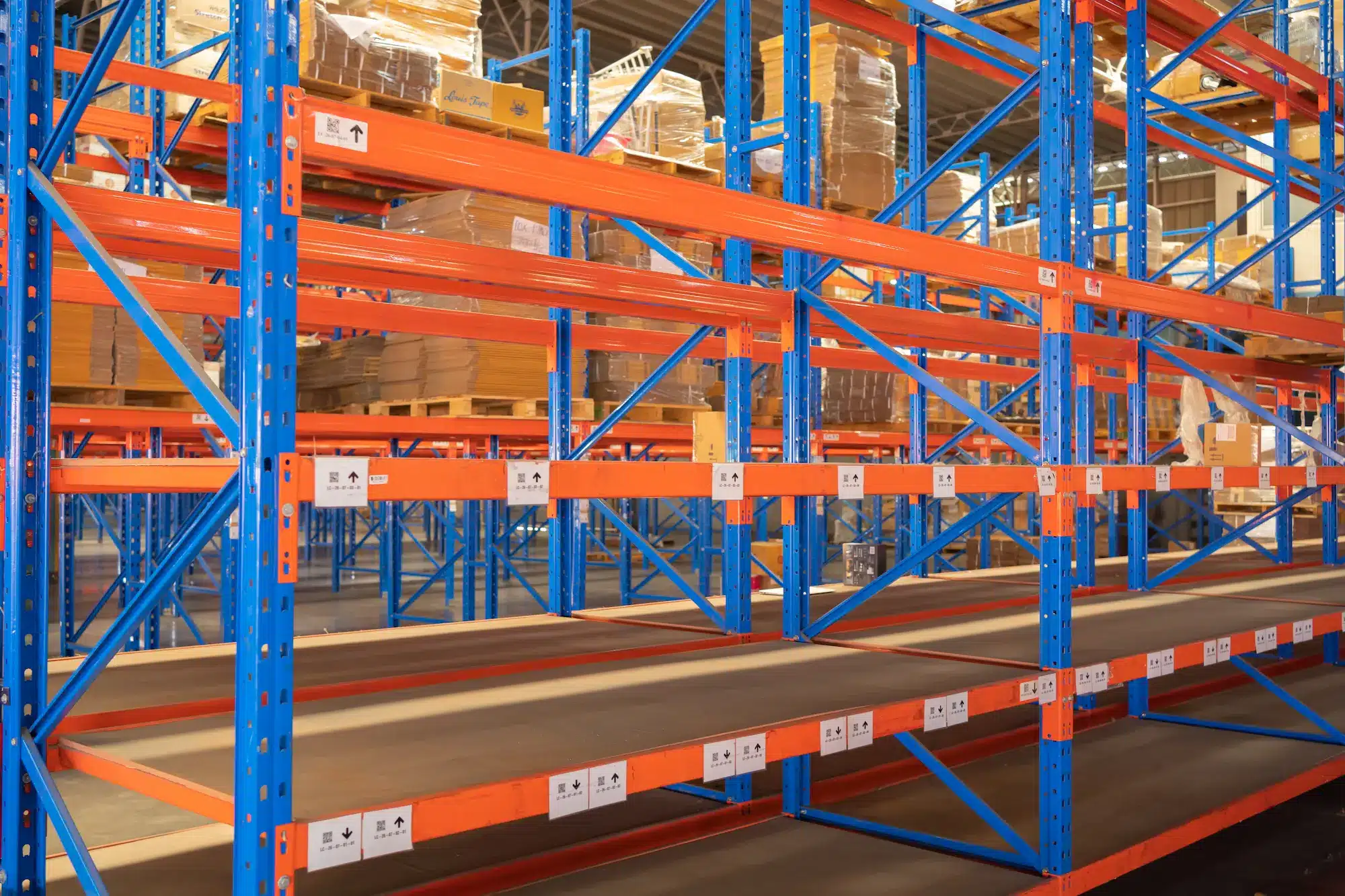
Choosing the right warehouse racking system is the first and most important step in professional warehouse management. It helps maximize space, reduce costs, improve safety, and support long-term business growth.
For businesses that plan to install or upgrade warehouse racking, UPR Thailand offers a wide range of pallet racking systems and complete warehouse solutions designed for Thai warehouses.
In this article, UPR Thailand introduces 6 popular warehouse racking types along with their key advantages and disadvantages to help you choose the right system.
6 Essential Warehouse Racking Types for Every Storage Facility
1. Selective Rack – The Most Accessible Standard System
Selective Rack is the most widely used warehouse racking system. It allows direct access to every pallet position.
Advantages
- Easy access to every pallet. It suits FIFO operations with fast product rotation.
- Adjustable beam levels to match pallet and product height.
- Flexible use for warehouses, factories, and distribution centers.
Disadvantages
- Requires wide aisles. Storage density stays lower than high-density systems.
- It may not maximize vertical space compared with high-density racks.
Best for Warehouses with many SKUs and fast-moving goods, such as FMCG products.
2. Drive-In Rack – High-Density Storage System
Drive-In Rack allows forklifts to drive directly into the rack structure. This system maximizes space usage.
Advantages
- Very high storage density.
- Ideal for large quantities of the same SKU.
Disadvantages
- Operates in LIFO mode. It does not suit FIFO operations.
- Requires suitable forklifts and safe driving space.
Best for Warehouses with large volumes of identical products, such as industrial goods or seasonal items.
3. Double Deep Rack – Dual-Row Storage System
Double Deep Rack is an upgraded version of Selective Rack. It stores pallets two rows deep to increase density.
Advantages
- Higher storage capacity than Selective Rack.
- Fewer aisles help save floor space.
Disadvantages
- Requires reach trucks or special forklifts.
- Rear pallets remain harder to access. Flexibility stays lower for fast rotation.
Best for Medium-sized warehouses that need more storage without very high turnover.
4. Mezzanine Floor – Vertical Space Expansion
Mezzanine Floor adds an intermediate level inside the warehouse to maximize vertical space without expanding the building.
Advantages
- Maximizes vertical space and adds usable area instantly.
- Supports storage, office space, or picking zones in the same facility.
Disadvantages
- Requires structural calculations and higher installation cost.
- Ceiling height, fire safety, and ventilation may limit design.
Best for Medium to large warehouses, factories, and distribution centers with high ceilings.
5. Mobile Rack – High-Density Sliding System
Mobile Rack moves on rails to open aisles only where needed. This system offers extremely high density.
Advantages
- Maximum space efficiency with fewer aisles.
- Controlled access suits automated warehouses.
Disadvantages
- High installation cost with electrical control systems.
- Not suitable for fast-moving products.
Best for Large warehouses, document storage, and facilities with limited space.
6. Carton Flow Rack – Fast Picking System
Carton Flow Rack uses gravity rollers to move products from back to front for quick picking.
Advantages
- True FIFO operation for fast and efficient picking.
- Ideal for e-commerce warehouses with frequent picking.
Disadvantages
- Supports light to medium loads only. Requires clean roller maintenance.
- Not suitable for heavy pallets.
Best for Order picking operations such as e-commerce, food processing, and fulfillment centers.
Compare Warehouse Racking Types
| Racking Type | Storage Method | Space Density | Pallet Access | Best Use |
| Selective Rack | FIFO | Medium | Easy access | General warehouses |
| Drive-In Rack | LIFO | Medium–High | Moderate access | Single-SKU, high volume |
| Double Deep Rack | LIFO | High | Slightly harder | Limited space / low turnover |
| Mezzanine Floor | – | Very high | Zone-based access | Factories / DCs |
| Mobile Rack | FIFO / LIFO | Very high | Automated access | Very limited / high-value space |
| Carton Flow Rack | FIFO | Medium | Fast access | Picking operations (e.g., E-commerce) |
How to Choose the Right Warehouse Racking for Your Business
- Assess pallet weight and product types. If you store heavy items or large pallets, pick racks that support the load. Choose a trusted provider like UPR Thailand for proper pallet racking and warehouse equipment.
- Study your warehouse flow. Fast-moving goods need systems with easy access, such as Selective Rack or Carton Flow.
- Calculate aisle space and building height. Plan to use vertical space well and reduce wasted aisle space.
- Choose certified manufacturers and installers. UPR Thailand states they supply varied warehouse equipment and deliver high-quality products so customers can trust product safety and quality.
- Plan for future expansion. Select a system that scales easily as your stock or operations grow.
Frequently Asked Questions (FAQ)
Q: Which rack saves the most space?
A: Mobile Rack and Drive-In Rack provide the highest space efficiency. They suit large warehouses that need very high density.
Q: Which rack works best for mixed-product warehouses?
A: Selective Rack fits best. You can adjust shelf heights and reach every pallet easily.
Q: What material makes the best rack?
A: Choose standard steel frames with anti-corrosion coating. Use certified installers to ensure safe load capacity and long-term reliability.

Invest Wisely in Warehouse Racking for Safety and Value
Choosing warehouse racking goes beyond buying storage equipment. It is a strategic investment. A good system improves efficiency and speed. It prepares your warehouse for future growth. Match the rack type to your product profile. Also, pick an experienced provider like UPR Thailand for professional installation and reliable warehouse systems.
UPR (Thailand) Co.,Ltd. > Columns > Logistics > Must Know! 6 Popular Warehouse Racking Types with Pros and Cons
 Contact us
  Call us
  Line Official